Natural disasters, power outages, and emergencies do not check your bank account before striking. Having both a financial emergency fund and a practical preparedness plan protects your family without requiring a bunker or a massive budget — most households can be well-prepared for under $300.
The Financial Side of Emergency Preparedness
Most financial advice focuses on building an emergency fund for unexpected expenses — and that is critical. But true emergency preparedness also includes protecting your financial documents, maintaining access to cash, and having insurance coverage appropriate for your risks.
During major disasters — hurricanes, floods, ice storms, wildfires — banks may be inaccessible, ATMs may be down, and power outages can prevent electronic payments. Having $200 to $500 in small bills at home (in a waterproof container) ensures you can buy essentials even when electronic payment systems are offline. After Hurricane Katrina and other major disasters, cash was the only accepted payment method for days or weeks.
Store copies of essential financial documents in a waterproof, fireproof container or a bank safe deposit box. Include insurance policies, identification documents, bank account numbers, mortgage or lease documents, and a list of all financial accounts with contact information. A cloud-based backup (encrypted) provides access from anywhere.
Building a 72-Hour Emergency Kit
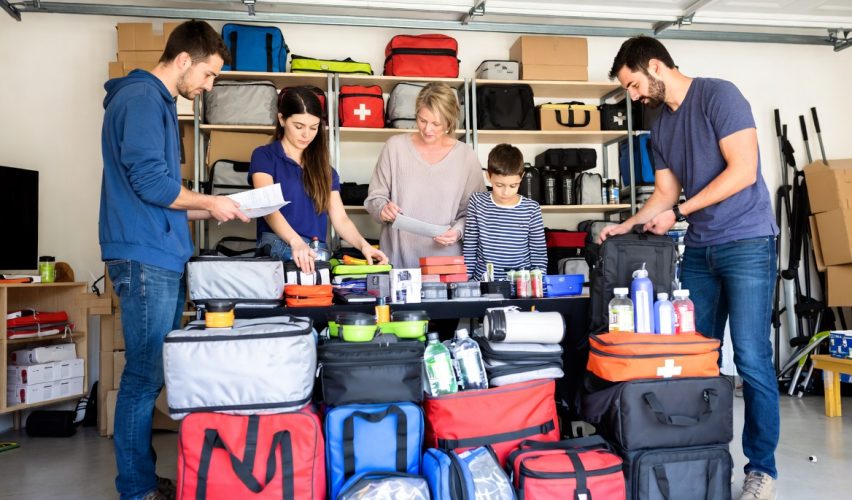
FEMA recommends every household be prepared to sustain itself for at least 72 hours without outside assistance. This covers the period until emergency services can respond and supply chains restart. Building this kit does not require expensive survival gear — most items are available at grocery and hardware stores.
Water: One gallon per person per day for three days. For a family of four, that is 12 gallons. Store-bought gallon jugs ($1 each) are the cheapest option. Total cost: approximately $12.
Food: Non-perishable items requiring no cooking: canned goods (with manual can opener), peanut butter, crackers, granola bars, dried fruit, canned tuna. Plan 2,000 calories per person per day. Three days of food for a family of four costs $40 to $60.
First aid kit: A basic kit costs $15 to $30 and includes bandages, antibiotic ointment, pain relievers, gauze, tape, tweezers, and antiseptic wipes. Add any prescription medications your family needs — keep a 30-day supply in the kit and rotate it regularly.
- Water — 1 gallon/person/day for 3 days ($12 for family of 4)
- Non-perishable food — 3 days supply ($40-60)
- First aid kit ($15-30)
- Flashlight and extra batteries ($10-15)
- Battery-powered or hand-crank radio ($15-25)
- Phone charging bank, fully charged ($15-30)
- Whistle for signaling ($2-3)
- Dust masks, plastic sheeting, duct tape ($10-15)
- Wrench or pliers for turning off utilities ($5-10)
- Manual can opener ($3-5)
- Local maps — do not rely only on phone GPS ($free-5)
- Copies of important documents in waterproof bag ($5)
Insurance: Your Financial Emergency Shield
Insurance is the most important financial tool for disaster recovery, yet many people are underinsured or have gaps in their coverage.
Homeowners/Renters insurance: Standard policies cover fire, theft, wind damage, and liability. They typically do NOT cover flooding or earthquakes — those require separate policies. If you live in a flood-prone area, consider flood insurance through the National Flood Insurance Program (NFIP) even if it is not required. Average flood insurance costs $700 to $800 per year.
Document your possessions. Walk through your home with your phone camera and record everything — furniture, electronics, clothing, appliances. Open drawers and closets. Store the video in the cloud. If you ever need to file a claim, this documentation makes the process faster and ensures you receive proper compensation. Without documentation, insurance companies may undervalue your losses.
Understand your deductibles. Know how much you would pay out of pocket before insurance kicks in. Some natural disaster deductibles are percentage-based (1 to 5 percent of the home’s insured value) rather than flat amounts. On a $300,000 home with a 2 percent hurricane deductible, you pay the first $6,000 of damage before insurance covers anything.
Budget for preparedness gradually. You do not need to buy everything at once. Spend $20-30 per week for two months, adding items to your kit each time. Week 1: water and food. Week 2: first aid and flashlight. Week 3: radio and batteries. Week 4: phone charger and tools. By week 8, you have a comprehensive kit for under $300 total, without straining any single paycheck.
Evacuation Financial Planning
If you need to evacuate your home, you need access to money, documents, and resources immediately. Having a plan in advance prevents the frantic scrambling that happens when an evacuation order is issued.
Go bag essentials: Cash ($200+), copies of IDs and insurance cards, list of financial account numbers and emergency contacts, phone charger, medications, one change of clothes, and essential toiletries. This bag should be ready to grab at a moment’s notice.
Know your costs: Evacuation typically involves gas ($30-60), lodging ($80-150 per night), food ($40-60 per day for a family), and potential pet boarding ($25-50 per day). A three-day evacuation can cost $400 to $800 for a family. Having this amount accessible — in your emergency fund and partially in cash — prevents financial stress during an already stressful event.
FEMA assistance: After a federally declared disaster, FEMA provides assistance for temporary housing, home repairs, and other disaster-related needs. Registration is free at disasterassistance.gov or 1-800-621-3362. Do not wait — apply as soon as the disaster is declared. Processing takes time, and earlier applicants typically receive assistance faster.
Seasonal Preparedness
Different seasons bring different risks. Adjust your preparedness plan accordingly. In winter, keep extra blankets, warm clothing, and a secondary heating option (safely). In summer, heat-related preparations include extra water, cooling supplies, and plans for power outages (no AC). In spring and fall, severe weather preparedness — tornado sheltering plans and storm supplies — takes priority.
Review your emergency kit twice a year (when clocks change for daylight saving time is a good reminder). Replace expired food and medications, check battery levels, update contact information, and verify that your insurance coverage still matches your needs. A well-maintained kit is far more useful than one assembled three years ago and forgotten.
Spend $30 this week on the first items for your emergency kit
Water, food, and a flashlight. Build from there over the next two months. Preparedness is a process, not a single purchase.
Finance Helper Hub may receive compensation when you click links on this page. All information is for educational purposes only and does not constitute financial, legal, or tax advice. Consult a qualified professional before making financial decisions.

Get Free Financial Tips Delivered to Your Inbox
Join thousands of readers learning to take control of their money. No spam, unsubscribe anytime.
We respect your privacy. Read our Privacy Policy.