
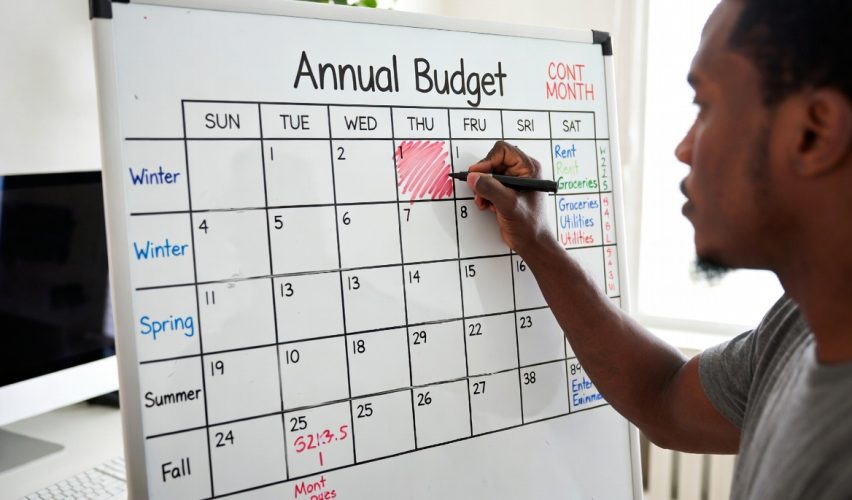
Car registration, holiday gifts, back-to-school shopping, summer camp, annual insurance premiums — these expenses come every year, but they still catch most people off guard. Seasonal budgeting spreads these predictable costs across the entire year so no single month breaks your budget.
The Problem With Monthly-Only Budgeting
Most budgets track monthly expenses — rent, utilities, groceries, transportation — and work fine for eight to nine months of the year. Then November hits with holiday spending, or August hits with back-to-school costs, and the budget explodes. These “surprise” expenses are not actually surprises. They happen every single year, on a predictable schedule.
The average American household has $5,000 to $8,000 in annual irregular expenses that are completely predictable: holiday gifts, vehicle registration and maintenance, insurance premiums, medical deductibles, home maintenance, school expenses, vacation spending, birthday celebrations, and seasonal clothing needs.
Without a plan, these expenses get covered by credit cards, emergency funds (which are not for predictable expenses), or frantic budget cutting in the months they hit. This creates a stressful boom-and-bust cycle that undermines financial progress. The solution is simple: identify every predictable annual expense and divide the total by 12.
Building Your Annual Expense Calendar
Grab a calendar or spreadsheet and walk through each month, listing every non-monthly expense you can anticipate. Be thorough — the expenses you forget are the ones that blow your budget.
January: Gym memberships (annual), tax preparation fees, winter utility spikes. February: Valentine’s Day, annual insurance renewals. March-April: Tax payments, spring clothing, Easter/Passover expenses, spring home maintenance. May: Mother’s Day, graduation gifts, Memorial Day travel.
June-July: Summer camp and activities, Father’s Day, vacation spending, 4th of July. August: Back-to-school supplies, clothing, and fees. September: Fall activities and sports registrations. October: Halloween costumes and events, heating season start.
November: Thanksgiving hosting costs, Black Friday shopping, early holiday gifts. December: Holiday gifts, parties, decorations, year-end charitable donations, winter clothing.
Creating Sinking Funds
A sinking fund is a savings category for a specific future expense. Instead of scrambling to find $1,000 for holiday gifts in December, you save $83 per month all year. When December arrives, the money is waiting.
- Holiday gifts: $1,000/year = $83/month
- Car maintenance and registration: $1,200/year = $100/month
- Medical expenses (deductible): $1,000/year = $83/month
- Home maintenance: $2,400/year = $200/month
- Back-to-school: $400/year = $33/month
- Birthday gifts and celebrations: $500/year = $42/month
- Annual subscriptions and memberships: $300/year = $25/month
- Vacation: $1,500/year = $125/month
Total in this example: $8,300 per year, or $691 per month. That is $691 that would otherwise hit your budget unpredictably in large chunks. Spread across the year, it becomes a manageable, predictable line item.
One account, multiple goals: You do not need a separate bank account for each sinking fund. Use one high-yield savings account and track the individual fund balances in a simple spreadsheet or an app like YNAB (which is designed for exactly this). When December arrives, your savings account has a combined balance, and your spreadsheet tells you which portion is allocated to gifts versus car maintenance versus medical expenses.
The Holiday Budget: The Biggest Seasonal Expense
The average American spends $900 to $1,000 on holiday gifts, with an additional $300 to $500 on decorations, food, travel, and events. Yet most people do not save for holidays — they charge everything in November and December and spend January through March paying it off with interest.
Start a holiday sinking fund in January. If your total holiday budget is $1,200, save $100 per month. By November, you have $1,100 to $1,200 ready. You shop stress-free, pay cash (or credit card for rewards, then immediately pay it off), and enter January with zero holiday debt.
Set a specific gift budget per person and stick to it. A spreadsheet listing every recipient and their budget keeps spending in check. Establish gift-spending agreements with extended family — a family gift exchange with a $25 limit is far more sustainable than buying individual gifts for 15 relatives.
Back-to-School and Seasonal Clothing
Back-to-school costs average $600 to $800 per child for supplies, clothing, electronics, and fees. Save $60 to $80 per month starting in January, and the full amount is ready by August. Shop back-to-school sales strategically — office supply stores offer loss leaders in late July and early August, with pencils, notebooks, and binders at near-free prices.
For seasonal clothing, budget a fixed amount per season rather than buying impulsively. A $150 quarterly clothing budget ($600 per year per person) covers wardrobe needs if you shop sales, buy versatile pieces, and take care of what you own. End-of-season clearance offers the best deals — buy next year’s winter coat in February at 50 to 70 percent off.
Annual Insurance Premiums
Many insurance policies offer a discount of 5 to 10 percent for paying the full annual premium upfront instead of monthly installments. But a $1,500 annual premium paid in one shot is tough if you have not saved for it.
Solution: save monthly for the annual payment. If your car insurance is $1,400 per year and the insurer offers an 8 percent discount for annual payment, you save $112 by paying upfront. Set aside $117 per month ($1,400 / 12), pay the annual premium when it is due, and pocket the discount. This turns a budget-busting expense into a money-saving strategy.
Making the System Work
Automate the monthly transfer. Calculate your total monthly sinking fund contribution and set up an automatic transfer to your savings account on payday. The money moves before you have a chance to spend it elsewhere.
Review quarterly. Check your sinking fund balances against upcoming expenses. Are you on track for holiday spending? Is the car maintenance fund adequate for upcoming service? Adjust if needed — it is easier to increase a monthly transfer by $20 now than to come up with $240 in December.
Celebrate the victories. When a traditionally stressful expense — holiday gifts, back-to-school, car registration — is covered by money you already saved, notice how different it feels. No credit card needed, no budget scramble, no financial stress. That feeling is the reward for seasonal budgeting, and it reinforces the habit.
List every predictable annual expense and divide the total by 12
Set up a monthly transfer to a sinking fund and never be surprised by a predictable expense again.
Finance Helper Hub may receive compensation when you click links on this page. All information is for educational purposes only and does not constitute financial, legal, or tax advice. Consult a qualified professional before making financial decisions.

Get Free Financial Tips Delivered to Your Inbox
Join thousands of readers learning to take control of their money. No spam, unsubscribe anytime.
We respect your privacy. Read our Privacy Policy.